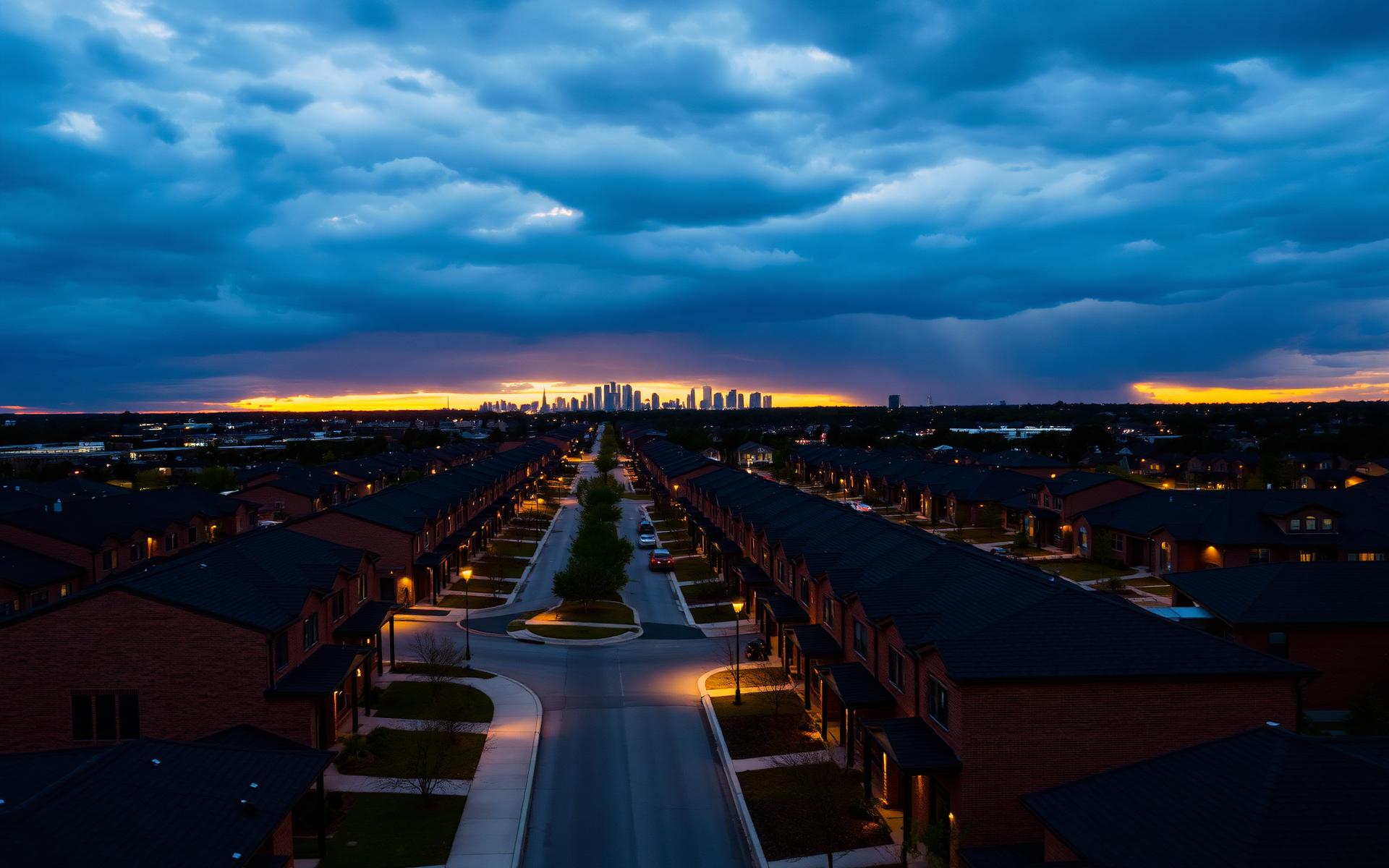
Fund I · Fort Worth, TX · July 2026
We manufacture attainable housing where America needs it most.
RBTF-X Fund I — a $5M equity fund capitalizing attainable infill housing in Fort Worth and adjacent Tarrant County submarkets: Fort Worth, Arlington, and Hurst.
01 — Policy shift
Housing infrastructure.
RBTF-X is housing infrastructure—a vertically integrated platform designed to solve America's housing shortage by controlling the entire housing production ecosystem.
Policy tailwinds are now aligned
The 21st Century ROAD to Housing Act validates the investment thesis. The federal government is prioritizing housing production, workforce housing, infill redevelopment, public-private partnerships, faster permitting, modern construction methods, and local implementation. Investor takeaway: you're building into a favorable policy environment rather than fighting against it.
Multiple revenue streams reduce risk
Unlike a traditional homebuilder that depends almost entirely on home sales, RBTF-X is designed to generate revenue from development fees, construction management, general contracting, home sales, rental income, property management, asset management, education and workforce training, capital management, and AI and technology services. Investor takeaway: diversified cash flow can make the platform more resilient across different housing market cycles.
Workforce is part of the supply chain
Most developers struggle to find skilled labor. RBTF-X addresses that challenge by developing workforce capacity through Rehab Warriors—creating reduced reliance on outside labor, a pipeline of trained project managers and supervisors, better quality control, and stronger execution capabilities. Investor takeaway: the platform invests in solving one of the industry's biggest operational constraints.
Institutional-quality operating platform
RBTF-X is not intended to be a single-project developer. It is structured to support multiple investment vehicles over time—housing funds, credit funds, opportunity funds, build-to-rent funds, and workforce housing funds—each leveraging the same operating platform. Investor takeaway: one operating company can support multiple investment strategies without rebuilding the organization each time.
Strong public-private partnership potential
The platform is designed to work with cities, housing authorities, economic development corporations, veterans organizations, employers, and educational institutions. This can create opportunities for land access, infrastructure partnerships, incentives, workforce funding, and long-term development pipelines.
Scalable through standardization
Rather than reinventing every project, the platform is built around repeatable systems: standard home plans, standard underwriting, standard construction processes, standard operating procedures, standard training curriculum, and a standard technology stack. Investor takeaway: repeatability supports growth while helping maintain execution quality.
Attractive asset class
Institutional investors continue to view attainable housing and workforce housing as long-term areas of demand because of persistent supply shortages and demographic trends. RBTF-X focuses on entry-level ownership, missing-middle housing, workforce housing, and neighborhood revitalization—segments that align with ongoing housing demand.
Platform economics
Each completed home can generate value beyond a single construction margin: land acquisition, development fee, construction fee, financing fee, property management, asset management, education and workforce outcomes, and capital deployment. Investor takeaway: the goal is to create a platform where multiple business lines participate in each project.
Why this matters to investors.
Investors are increasingly evaluating platforms, not just projects. The objective is to back an organization that can repeatedly source opportunities, execute efficiently, and deploy capital across multiple markets.
One-sentence investment thesis
RBTF-X is a vertically integrated housing infrastructure platform that develops workforce housing by combining capital, land, workforce development, technology, and construction into a scalable operating system designed to increase housing production while creating multiple recurring revenue streams.
Institutional value proposition.
- Multiple profit centers instead of a single-source revenue model.
- Alignment with current federal housing policy, including initiatives that encourage housing production and redevelopment.
- A scalable operating model that can support expansion into multiple markets.
- Control over key parts of the value chain, from site acquisition through development, construction, workforce training, and long-term asset management.
- Mission-driven differentiation through veteran workforce development and community revitalization, while remaining structured as a for-profit public benefit corporation.
- The ability to launch multiple investment vehicles over time—such as development funds, credit funds, or build-to-rent strategies—using the same underlying operating platform.
This is the positioning that moves the conversation beyond "another developer" and toward "a housing infrastructure platform with the capacity to deploy capital across an integrated ecosystem." That distinction is likely to resonate more with institutional investors evaluating long-term platform investments rather than one-off development opportunities.
Investment thesis
Capitalize an operator, not a concept.
Attainable for-sale infill housing in Fort Worth and Tarrant County offers durable demand, basis discipline, and repeatable project-level returns when paired with local sourcing, standardized execution, and municipal traction.
The question is not whether housing demand exists. It's whether capital is behind an operator already deploying inside the market. It is.
The ask
$5M of LP equity for Fund I — project equity, predevelopment, lot control, and execution capacity against the near-term Tarrant County pipeline.
10 self-performed 76104 homes sold for $2.919M gross. Independently verifiable.
167 doors and $46.48M realized since 2021. 20 under construction, 110+ lots.
265 units active across Fort Worth, Arlington, Hurst and adjacent markets.
"The immediate investment opportunity is the fund — not the platform. Capital scales an already functioning local execution engine, not an unproven concept."
02 — The sponsor
Proven at three levels.
Institutional development
2,076 units completed across DFW as developer / master developer with partners Bridgetowers and JPI — LIHTC communities, build-to-rent, single-family, and workforce rehab (Arcadia Trails, Gala at Central Park, Provision, Brooklyn Village, 165-unit entitled BTR exit).
Self-performed infill
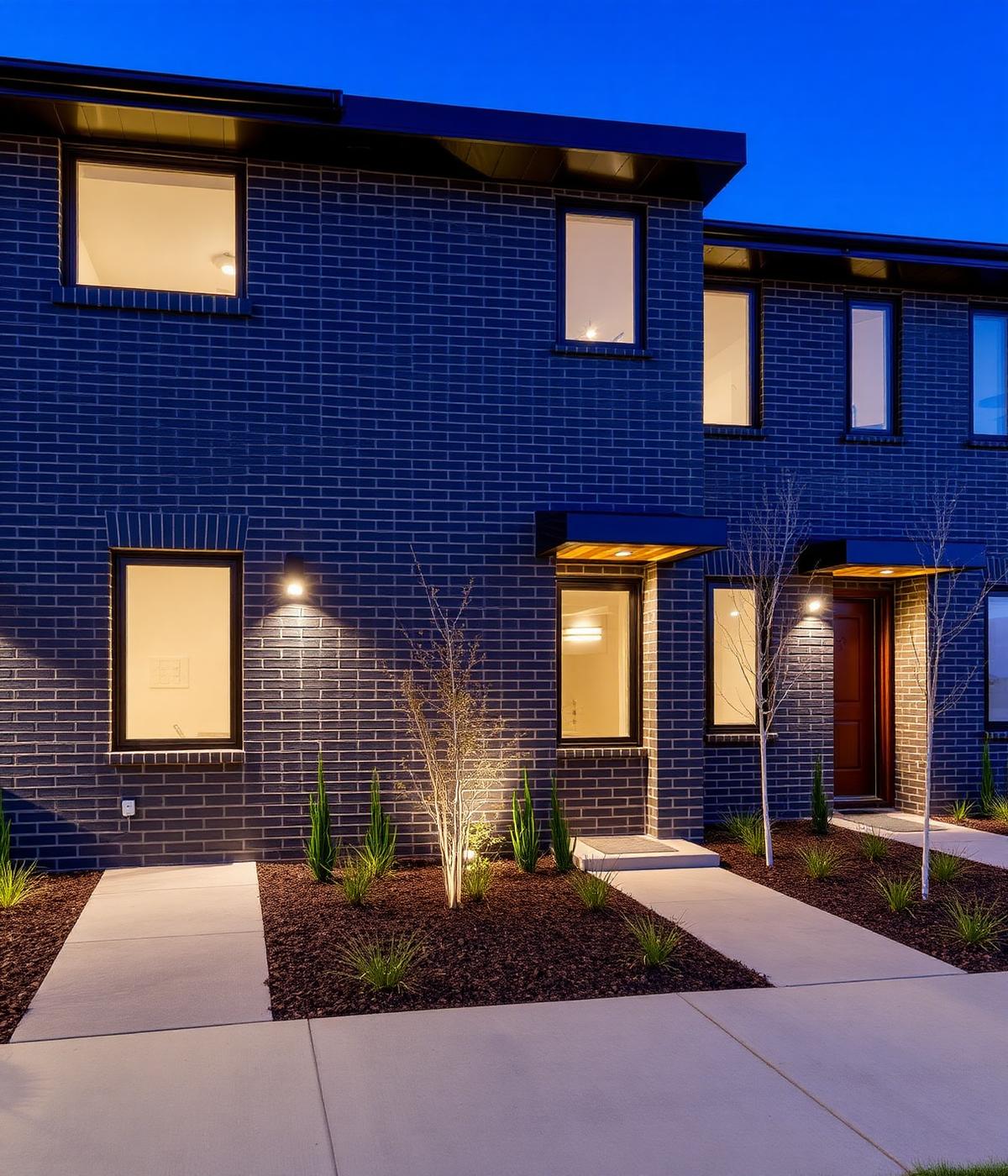
10 homes built and sold directly in Fort Worth's 76104 — $2.92M in sales with $1.1M gross spread — plus one active, one under construction. Settlement-verified. This is the proof of concept.
Operator track record
167 doors sold / $46.5M since 2021, growing every year. 33 doors and $13.5M in the first half of 2026 alone. 20 homes under construction, 110+ lots acquired, four subdivisions delivered.
Operator sales · doors & volume
03 — The strategy
Simple by design.
Scattered-site infill lots in a defined Fort Worth trade area.
Standardized pattern-book homes, townhomes, and duplexes.
Attainable price tier ($230K–$315K), sub-12-month cycle.
Capital turns and redeploys into the next projects.
Unit economics
Real homes, real numbers.
With standard construction financing and a build-to-sell cycle under 12 months, fund equity is designed to turn multiple times over the fund term. Deal-level settlement statements and cost ledgers available upon request.
04 — Ready now
265 units in the pipeline.
Plus 110+ operator-controlled infill lots and a growing funnel of scattered-site opportunities in the target trade area.
| Project | Location | Units | Stage | Opp. Zone |
|---|---|---|---|---|
Patriot Gates BTR + retail | Arlington, TX | 64 | Pre-development | Yes |
Townhome redevelopment For-sale | Fort Worth, TX | 23 | Pre-development | Yes |
The Canopy For-sale | Irving, TX | 60 | Pre-development | Yes |
4-acre build-for-sale For-sale | Hurst, TX | 40 | Site planning | — |
Infill townhomes For-sale | Richland Hills, TX | 53 | Underwriting | Yes |
Infill townhomes For-sale | Waco, TX | 25 | Underwriting | Yes |
| Total pipeline | 265 | 5 of 6 |
Fund model
How the fund compounds.
Built bottom-up from a verified 76104 carve-out, then scaled across the fund's deployment window with disciplined capital recycling.
Per home · attainable infill
- Sale price
- $247K
- All-in cost
- $215K
- Pre-fee profit
- $31.5K
- Post-fee profit to equity
- $27.2K
- Post-fee margin
- 11.0%
Fund I · $5M equity, 36-month deployment, ~1.8x capital turns
- Homes delivered
- ~37
- Gross development value
- $9.1M
- Aggregate post-fee profit
- $1.0M
- Equity multiple (target)
- 1.6–1.9x
- Target LP IRR
- 16–20%
Illustrative at the $5M target. Per-home economics verified against an active 76104 carve-out; fund-level figures assume conservative leverage and 18-month build-to-sale cycles. Full underwriting model, sensitivity tables, and pipeline-level pro forma provided upon request.
Use of proceeds
Where the capital goes.
- 01Site acquisition & lot control
Scattered-site and clustered infill positions in the target trade area.
- 02Predevelopment & entitlement
Design, permitting, and municipal approvals against the pattern-book.
- 03Vertical project equity
Construction equity funding the build-to-sell cycle.
- 04Execution working capital
Working capital against active production.
- 05Deployment capacity
Select operating capacity to manage the near-term pipeline.
Addendum
The backstory, in its right place.
The civic and nonprofit roots of Rebuilding the Fort created local trust, neighborhood access, and municipal traction inside Fort Worth — the foundation on which this operator's local edge was built.
The for-profit investment vehicle exists to capitalize and scale production against that groundwork. It is a complement to the mission, not a replacement for it. The current raise is designed to capitalize Fund I with a clear local mandate — a defined geography, documented proof, and a near-term path to deployment.
05 — Terms
Fund terms.
Fund II priority for co-investment allocation. Definitive offering documents provided to qualified investors upon request.
- Target raise
- $5,000,000 · hard cap
- Structure
- Single-purpose fund (LP/LLC) · RBTF-X affiliate as GP
- Preferred return
- 8% to investors, cumulative
- Profit split
- 80 / 20 investor / sponsor above preferred
- Management fee
- 2% of committed capital
- Minimum investment
- $100,000 · accredited only
- Term
- 3 years + two 1-year extensions · capital recycled
- Sponsor commitment
- Alongside investors
- Fund II priority
- First access to co-invest and Fund II